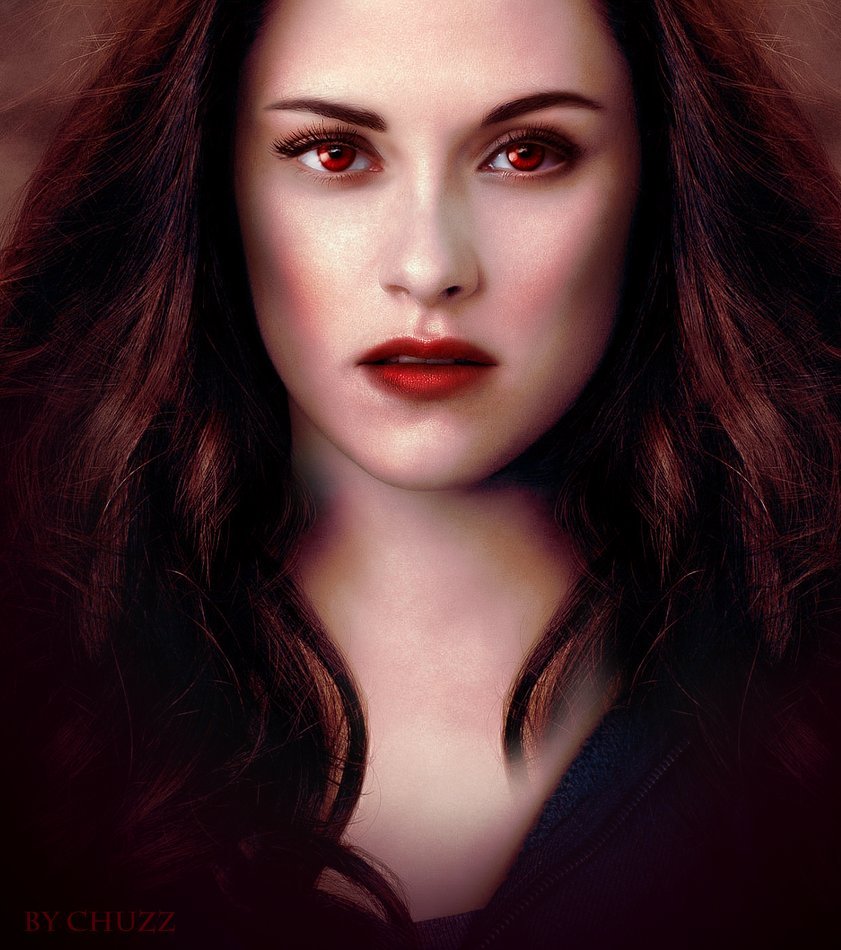
Bella Swan Fan Theories & Interpretations: Explore Her Abilities and Choices
From her first clumsy steps into Forks, Bella Swan wasn't just a quiet new girl; she was a seismic event, a human anomaly drawing the supernatural to her like a moth to a very dangerous, sparkly flame. Her journey, steeped in vampire allure and werewolf loyalty, has sparked countless debates, but few subjects ignite the Twilight fandom quite like the intricate Bella Swan Fan Theories & Interpretations. Why was she so unique, even before her transformation? What truly drove her monumental choices? Let’s peel back the layers and explore the depths of fan speculation that continue to shape how we understand Stephenie Meyer's reluctant heroine.
At a Glance: Key Bella Swan Fan Theories
- Peculiar Powers: Theories suggest Bella might be a succubus, half-werewolf, possess latent ancestral vampiric abilities, or share a telepathic bond with Edward.
- Unique Control: Her exceptional self-control as a newborn vampire is often linked to the silent nature of her transformation.
- Driving Choices: Her decisions are seen as narrative shortcuts, a quest for ultimate security, reflections of cultural femininity, or even a deep-seated "death curiosity."
- Identity & Agency: Debates rage whether her transformation was an act of personal agency or a fulfillment of socially constrained options.
- Mythic Echoes: Many interpretations see Bella's story as mirroring classic archetypal narratives.
The Enduring Enigma: Why Bella Swan Sparks Endless Debate
Bella Swan often gets painted as a blank slate, a "everygirl" meant for reader projection. Yet, paradoxically, her very perceived blandness, combined with her magnetic pull on supernatural beings and a series of seemingly inexplicable characteristics, makes her one of fiction's most fertile grounds for fan theorizing. What initially seems like a straightforward love triangle quickly morphs into a complex web of destiny, unique biology, and profound personal transformation. Fans aren't just reading the story; they're dissecting it, trying to solve the unspoken riddles Bella presents.
Her story isn't just about falling in love with a vampire; it's about a girl who defies expectations, whose ordinary exterior masks an extraordinary interior. This blend of the mundane and the miraculous invites readers to fill in the gaps, leading to some of the most creative and compelling Bella Swan Fan Theories & Interpretations.
Unpacking Bella's Peculiar Powers: Theories on Her Abilities
Long before she became a vampire, Bella displayed traits that set her apart. She was Edward’s irresistible "singer," immune to certain vampiric powers, and possessed an innate mental shield. These unexplained phenomena aren't just plot conveniences for fans; they're clues to a hidden truth about Bella's unique essence.
The Succubus Hypothesis: An Unseen Allure
One of the more provocative theories suggests Bella might actually be a succubus, or at least possess succubus-like qualities. Despite being frequently described as clumsy and unremarkable in her human form, Bella inexplicably draws intense male attention. Every male at Forks High School, including the notoriously aloof Edward Cullen, is immediately captivated by her. This isn't merely infatuation; it's an almost primal draw that the theory attributes to an unconscious, powerful, and supernatural allure—a hallmark of succubi. It provides an answer to the often-asked question: why her?
The Half-Werewolf Angle: Explaining Inconsistencies
Perhaps one of the most robust theories revolves around Bella being part human, part werewolf. This idea attempts to reconcile several inconsistencies in Bella’s interactions with vampires:
- Immunity to Powers: Edward's mind-reading and Aro's abilities (like Jane’s pain inducement) are ineffective against Bella. Yet, Alice can see Bella's future, and Jasper can influence her mood. This selective immunity is a major puzzle.
- Werewolf Shield: Vampiric powers are often depicted as being disrupted or blocked by werewolves. If Bella carried dormant werewolf genes, this would elegantly explain why some vampiric abilities fail on her, while others (like Alice's foresight, which taps into choices, not mental shields) still function.
- Renesmee's Imprint: This theory also offers a plausible explanation for Jacob's imprint on Renesmee. If Renesmee inherited a subtle werewolf gene from Bella, it would make the imprint less about a sudden plot device and more about a genetic predestination, deepening the complex human-werewolf dynamics in the series.
It’s a neat theory that ties together several loose ends, making Bella's unique biology seem less arbitrary.
Ancestral Vampire Roots: A Shield Through Time
Bella's most prominent innate ability is her mental shield, which protects her (and later, others) from psychic attacks. As a human, it's latent; as a vampire, she learns to project it. The theory here posits that this isn't a random mutation but a dormant ability inherited from a distant vampire ancestor. Much like Renata, Aro's personal guard who can deflect physical attacks with her shield, Bella might come from a lineage that carried this specific defensive gift. Perhaps her distant relative was even named Renata, offering a subtle nod to a hidden family history and adding depth to the nuanced world of Twilight's vampire abilities.
Edward's Telepathic Whispers: More Than Just a Memory
During Edward's absence in New Moon, Bella frequently hears his voice warning her during dangerous moments. While initially interpreted as her subconscious or a manifestation of grief, a popular fan theory suggests it was more. What if Edward, whose thoughts are usually a cacophony to him, was consciously or subconsciously projecting his warnings to Bella? The fact that he seemed to have information Bella didn't (e.g., about Jacob's whereabouts or intentions) lends credence to the idea that this wasn't just her imagination, but a nascent, perhaps unintended, telepathic link between them, foreshadowing their eventual deep bond. It transforms a moment of emotional distress into a hint of supernatural connection.
The "Panic Room" Prequel Parable: A Dark Origin Story
This highly speculative but fun theory connects Kristen Stewart's earlier role as Sarah in the movie "Panic Room" to Bella Swan. In "Panic Room," Sarah suffers from diabetes and nearly dies due to a delayed glucagon injection. The theory suggests that this near-death experience, particularly the altered smell of her blood due to metabolic changes, is what makes Bella's blood so uniquely tantalizing to Edward, designating her his "singer." Furthermore, her trauma and shyness in "Panic Room" are seen as a prequel to Bella's withdrawn and often anxious personality. It's a meta-theory that plays with the actress's filmography to create a compelling, if unofficial, backstory.
Reincarnation and the "Singer": A Soulmate Across Lifetimes
Aro famously calls Bella Edward's "singer" because her blood possesses an unparalleled allure for him. But what if this goes beyond mere biology? Some fans believe Bella isn't just a random human; she's Edward's reincarnated soulmate, a connection so profound that it manifests in his vampiric thirst. This theory adds a layer of cosmic destiny to their relationship, suggesting their bond transcends a single lifetime. It hints at an older, deeper narrative, making their connection feel less like a chance encounter and more like an inevitable reunion that has spanned eons, influencing Edward Cullen's character and motivations from the very beginning.
Unmatched Control: A Vampire Prodigy?
Upon her transformation, Bella exhibits extraordinary self-control as a newborn vampire, a feat almost unheard of. While other new vampires struggle fiercely with their thirst, Bella resists killing humans and focuses her powers with surprising discipline. The theory linking this to her transformation process notes that Carlisle, Rosalie, and Bella all underwent their transformations in silence, without crying out. Carlisle gained discipline, Rosalie resilience, and Bella, instant control. This suggests that the internal fortitude exhibited during the painful, silent shift directly correlates with the level of control and unique strength a vampire develops, marking Bella as an exceptional case from the moment of her rebirth. It suggests her stoicism during a moment of immense pain was a precursor to her immense willpower.
Deciphering Bella's Pivotal Choices: Theories on Her Motivations
Beyond her mysterious abilities, Bella's decisions—especially her unwavering choice of Edward and her embrace of vampirism—are constant points of discussion. Were these choices truly hers, or was she simply following a script?
The Narrative Shortcut & Reader's Canvas: A Plot Device or Projection?
Many critics and fans suggest Bella's choices aren't deep character developments but serve a dual purpose: they function as narrative shortcuts, propelling the high-stakes fairy tale towards its predetermined "happily ever after." Additionally, Bella’s often-passive nature makes her a perfect blank canvas for readers to project their own desires for protection, devotion, and dramatic transformation. Her choices, then, become a collective fantasy, fulfilling readers' aspirations rather than revealing Bella's unique psychological depth. She becomes a vessel for universal longings, simplifying complex emotional journeys into relatable, aspirational outcomes.
A Quest for Everlasting Security: Escaping the Mundane
Bella's life before Forks is often described as mundane and lonely. She craves permanence and stability. The theory here is that Bella chooses Edward because he represents eternal protection from an uncertain, aging, and often painful human world. Becoming a vampire isn't just about love; it's a literal escape from the risks of adulthood, pain, and mortality. It's a desperate yearning for a fixed, unchanging existence, free from the anxieties and disappointments of human life. Immortality, in this view, is the ultimate form of security, a shield against all future sorrow.
Echoes of Femininity: Cultural Scripts and Archetypes
Bella's journey, particularly in deeper dive into the pivotal events of Breaking Dawn, highlights themes of self-sacrifice, motherhood, and dependency. This interpretation suggests that her choices, rather than being revolutionary, actually reinforce traditional cultural scripts of femininity found in classic fairy tales. The heroine is rewarded for her passivity, her readiness for sacrifice, and her embrace of domesticity and motherhood. Bella's arc, therefore, is seen as embodying societal expectations of women, where true fulfillment is found in a protected, romantic union and the creation of a family, however unconventional. This perspective often underpins feminist critiques and interpretations of the saga.
The Allure of the Dangerous: Death-Infused Curiosity
Bella frequently describes experiencing a "rush" when in danger, a thrill she seems to actively seek out. This theory proposes that Bella possesses a profound, almost morbid curiosity about death and the dangerous unknown. Her gravitation towards the vampiric life isn't just about Edward; it's about fulfilling a personal, dangerous longing for extremity. Becoming a vampire is the ultimate "rush," an embrace of a life that flirts with death, satisfies a forbidden desire, and transcends the ordinary human experience. It’s an internal thrill-seeking that goes beyond simple adolescent rebellion.
Agency vs. Social Constraints: A Complex Dance
Was Bella truly an agent of her own destiny, choosing immortality and motherhood freely? Or were her options heavily circumscribed by the supernatural world she entered and the social scripts she inhabited? This debate explores whether Bella’s choices were empowered or limited. The narrative often rewards her passivity (drawing romantic attention, receiving protection, sanctified motherhood) and punishes her attempts at assertiveness (like her rebellious streak in New Moon). Her final choices, while seemingly empowering, can also be read as Bella choosing from a menu of options largely dictated by her circumstances and the cultural expectations of her role within the story.
The Metamorphosis of Identity: Shedding the Uncertainties
Becoming a vampire isn't just a physical transformation for Bella; it's a profound shift in her self-concept. This theory suggests Bella sheds the uncertainties and awkwardness of adolescence for a fixed, celebrated, and powerful identity. The transformation offers a clear, defined role that human life never provided. It's a complete metamorphosis, where she leaves behind the vulnerable, clumsy girl for a strong, beautiful, and eternal being. This can be viewed as either a feminist reclamation of power through radical change or a critique of how women are expected to conform to idealized forms to find their place.
Wish Fulfillment: Bella as an Avatar of Desire
This interpretation argues that Bella was deliberately crafted to be somewhat "empty," allowing readers to project their deepest fantasies onto her. Her choices then become less about her unique character development and more about fulfilling common reader desires for an epic love, eternal youth, extraordinary abilities, and a perfect family. In this sense, Bella isn't making choices so much as she is activating plot switches designed to realize collective wish fulfillment, making the reader feel more immersed and invested in the unfolding fantasy.
Trauma and the Allure of Stability: A Coping Mechanism
Bella experiences significant trauma throughout the series, particularly after Edward's departure in New Moon. This theory posits that Bella clings to Edward and the vampiric world because it offers control, stability, and a promise of unchanging eternity—a stark contrast to the emotional chaos and uncertainty of her human life and the volatile, emotional world of Jacob and the werewolves. Becoming a vampire is, therefore, a coping mechanism, a way to anchor herself in an unshakeable reality, free from the pain and unpredictable nature of human existence. It's a psychological choice to escape recurrent distress.
Mythic Resonance: Archetypes in Play
Stephenie Meyer often draws on classic mythic templates in her storytelling. Bella's choices, therefore, can be interpreted as echoing timeless archetypes: the bride caught between two worlds (Edward and Jacob), the maiden who chooses death or rebirth, the hero's journey through transformation. By aligning Bella's decisions with these established mythological patterns, Meyer imbues her story with a sense of destiny and grand narrative significance, making Bella's personal choices resonate with universal human experiences and ancient storytelling traditions.
Beyond the Books: The Fandom's Enduring Legacy
These myriad Bella Swan Fan Theories & Interpretations aren't just idle speculation; they are a testament to the enduring power of compelling storytelling and character development, even when that development is open to vast interpretation. The act of theorizing transforms readers from passive consumers into active participants, co-creating meaning and deepening their engagement with the narrative. It’s a collective effort to understand the unspoken, to rationalize the fantastic, and to find consistency in a world that often defies logic.
The ongoing discussions around Bella's choices and abilities reflect how deeply her story has resonated with millions. They highlight the aspects of her character that fans find most intriguing, frustrating, or inspiring, proving that a well-crafted character, even one intended as a blank slate, can evolve into something far more complex and debatable in the minds of readers.
Engaging with the Theories: How to Form Your Own Interpretation
With so many intriguing theories floating around, how do you decide what resonates with you?
- Revisit the Text: Go back to the original Twilight books and look for specific passages, descriptions, or dialogues that support or refute a theory. Does Bella's behavior truly align with a succubus? Are there explicit clues about an ancestral shield?
- Consider the Author's Intent (or Lack Thereof): While fan theories often go beyond what the author explicitly stated, understanding Meyer's general themes (romance, destiny, choice) can offer a framework. Sometimes, a lack of official explanation is precisely what fuels fan theories.
- Evaluate for Consistency: Which theory best explains the most inconsistencies or unexplained phenomena in the narrative without creating new plot holes? The "half-werewolf" theory, for instance, is popular because it ties together several disparate elements.
- Reflect on Your Own Experience: What does Bella's story represent to you? Do you see her choices as empowering or limiting? Your personal connection to the character will naturally influence which interpretations you find most compelling.
- Engage with the Fandom: Join online forums, watch YouTube analyses, and discuss with other fans. Hearing diverse perspectives can broaden your understanding and introduce you to new ways of thinking about Bella.
Ultimately, the beauty of fan theories lies in their collaborative nature. They turn a singular story into a universe of possibilities, allowing you to Explore the Bella Twilight series not just as a reader, but as a detective, philosopher, and co-creator. Whether you believe Bella was always destined for greatness due to hidden powers, or that her choices were a testament to her unique will (or perhaps a mixture of both!), the rich tapestry of fan interpretations ensures her story remains as vibrant and mysterious as the forests of Forks themselves.